How Many Watts of Solar Do You Need on a Boat? (Real UK Liveaboard Guide 2026)
Updated: Apr 28
If you’re planning a liveaboard setup, one of the biggest questions is:
How much solar power do you actually need on a boat?
The short answer is: it depends entirely on how you live onboard — not just the size of your boat. We live full-time on a 44ft sailboat in the UK, running everything from Starlink to laptops and a fridge off solar, so this guide is based on real-world usage, not theory.
Quick Answer: Boat Solar System Size (Watts Needed)
Most liveaboard sailboats need:
300–600W → weekend cruising / light use
600–900W → full-time liveaboard (typical setup)
900–1200W+ → remote work + high energy use systems
👉 For most full-time liveaboards in the UK, 600–900W is the realistic sweet spot.
Why solar sizing on a boat is different
Unlike houses or vans, boats have:
limited roof/deck space
constant movement (efficiency loss)
highly variable sunlight (especially in the UK)
multiple overlapping systems (navigation, internet, fridge, etc.)
So solar sizing is less about “watts per panel” and more about:
Can your system consistently replace your daily energy use?
What actually uses power on a boat?
To size solar properly, you need to understand demand first.
Typical liveaboard energy use includes:
Starlink Mini → ~40–70Ah/day
(See also: How much power does Starlink use on a boat?)
Laptops & remote work → ~20–40Ah/day
Fridge → ~30–60Ah/day
Lights, pumps, devices → ~10–30Ah/day
👉 Total typical liveaboard usage: 100–200Ah per day (12V system)
That’s the real number your solar system needs to support.

So how many watts solar do you actually need?
A rough UK-based rule of thumb:
100W solar ≈ 30–40Ah per day (summer average)
So:
🟢 Light use boat
300W solar → ~90–120Ah/day
Enough for weekends / marina hopping
🟡 Typical liveaboard
600–900W solar → ~150–250Ah/day
Supports full-time living
🔴 High-demand setup (like ours)
900–1200W+
Handles:
Starlink
Remote work
Fridge
Off-grid anchoring
This is the exact solar setup we use onboard (full parts list + install): DIY Boat Solar Setup (780W System Guide)
Our real setup (780W liveaboard system)
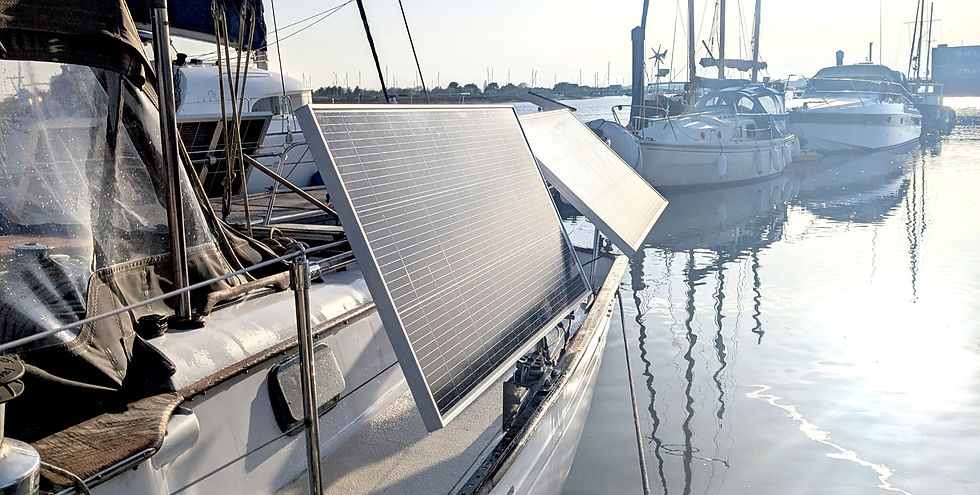
We run a 780W solar setup on a 44ft sailboat in the UK.
It supports:
Starlink Mini (constant use)
Remote work (daily laptops)
Fridge running 24/7
General onboard systems
👉 This setup also directly supports what we cover in: Best Internet Options for Boats: Why We Chose Starlink
Real-world outcome:
✔ Fully self-sufficient on sunny days
✔ Balanced battery bank most of the time
⚠ Requires energy awareness in winter
🌧️ UK reality: solar is seasonal
This is where many people get caught out.
Summer:
High solar efficiency
Often energy positive
Easy battery recovery
Winter:
Short days
Low sun angle
Frequent cloudy periods
👉 In the UK, winter is where system sizing really matters.
This is also why many liveaboards cross-check their setup against: Hidden Costs of Living on a Boat in the UK
Watts vs batteries (important mistake people make)
Solar panels alone don’t define your system.
You also need:
Battery capacity (Ah or kWh)
Charge controller efficiency
Real daily consumption
A common mistake is:
“I have 400W solar, so I’m fine”
But without storage and load balancing, that doesn’t work in real conditions.
How Starlink changes solar needs
Modern liveaboard setups now include constant internet usage.
Starlink Mini typically adds:
~40–70Ah per day
👉 That alone can significantly increase solar requirements.
We explain this in detail here: Starlink vs 5G for Boat Life in the UK
How to know what YOU need
Ask yourself:
✔ You need more solar if:
You anchor regularly
You work remotely
You run Starlink or similar systems
You live onboard full-time
✔ You can go smaller if:
You stay in marinas often
You only cruise weekends
You don’t rely heavily on electronics
👉 If you’re just starting out, this helps: UK Liveaboard Checklist (2026 Guide)
Final thoughts
There’s no single “correct” solar size for a boat — but there is a correct range based on lifestyle. For most UK liveaboards:
600–900W is the realistic, functional range for full-time off-grid living.
We run 780W, and it sits right in the middle of that sweet spot — enough for real independence, without overcomplicating the system.


very informative, thanks :)
could you explain how you put together your full power set u, like how did you link your panels to the other parts in your system? did you follow a specific guide or are you experienced with electrics?