🛰️ Can You Use Starlink Offshore? (UK Liveaboard Reality Guide 2026)
Updated: Apr 28
If you’re thinking about using Starlink on a boat, one of the biggest questions is simple:
Can you actually use it offshore?

The answer is yes — but not in the way most people expect. Starlink works extremely well for coastal cruising and nearshore sailing, but its performance offshore depends on where you are, what plan you’re using, and how far you are from land.
Here’s the real-world breakdown from our experience living full-time on a 44ft sailboat in the UK.
Quick Answer: Can You Use Starlink Offshore?
Yes — Starlink can work offshore, but with limitations.
Nearshore / coastal waters: Works reliably
Moderate offshore distances: Works, but may be less stable
Deep offshore passages: Not guaranteed unless using specialised maritime plans
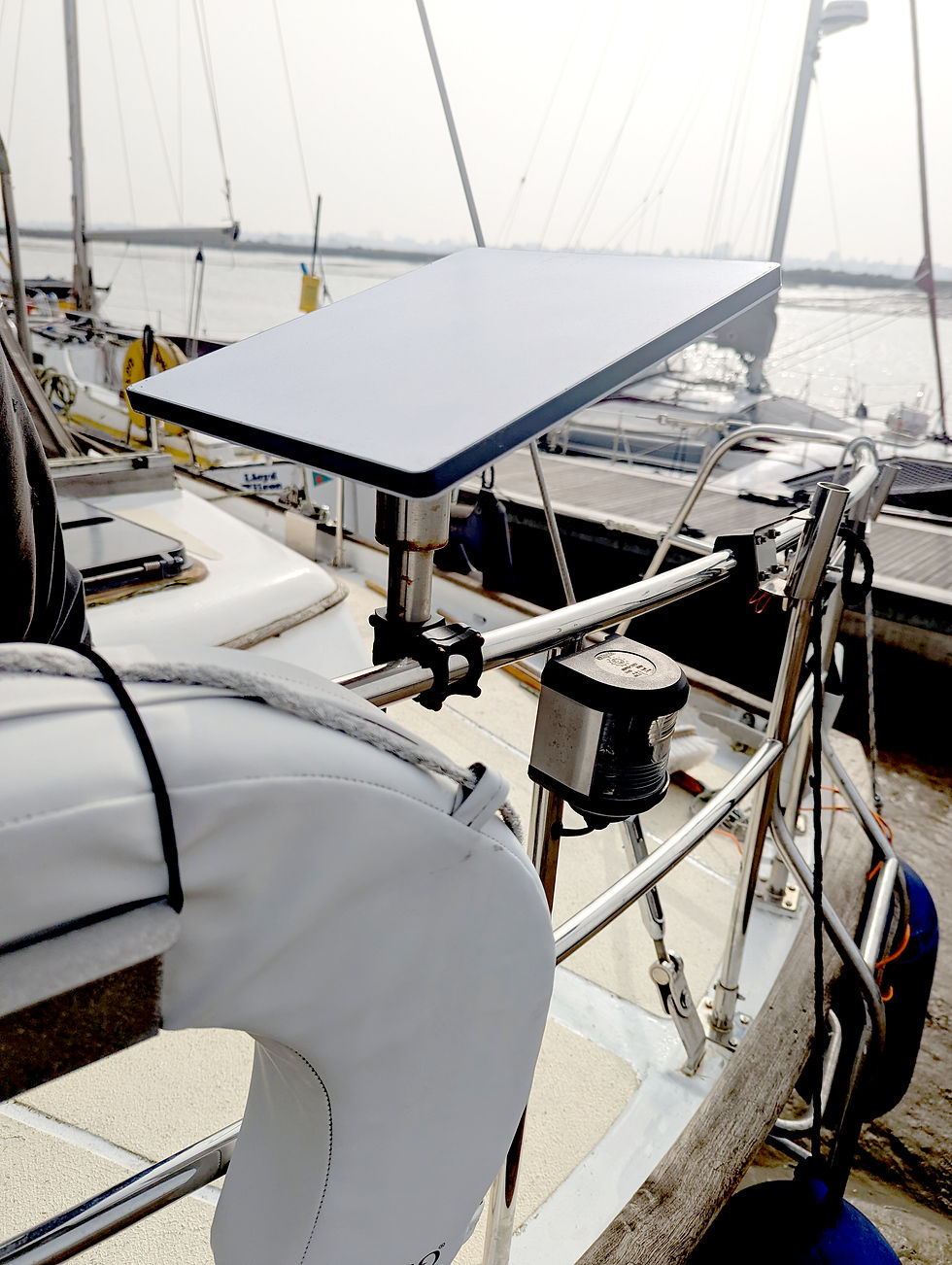
👉 In simple terms: Starlink is excellent for coastal cruising, but not designed as a guaranteed deep-ocean communication system. This is the exact Starlink setup we use onboard.
What “Offshore” Actually Means for Starlink
This is where confusion usually starts.
“Offshore” can mean very different things:
1–10 nautical miles from land
10–50 nautical miles out
Mid-Channel crossings (UK ↔ France)
Ocean passages
Starlink performance changes significantly depending on which zone you’re in.
How Starlink Actually Works at Sea
Starlink relies on low Earth orbit satellites, which move constantly across the sky.
That means:
You need a clear view of the sky
Coverage is strongest near populated coastal satellite density
Handovers between satellites can affect stability offshore
👉 The further you go offshore, the fewer ground support signals and network optimisations you benefit from.

Real-World Performance
🟢 Near coast (UK shoreline, marinas, anchorages)
Very stable
High speeds (100–200 Mbps)
Perfect for remote work
🟡 Coastal passages (5–30nm offshore)
Mostly stable
Occasional dropouts during satellite switching
Still usable for most tasks
🔴 Further offshore / open water
More frequent interruptions
Slower reconnections
Not reliable for critical work without backup systems
🛰️ Plans Matter: Roam vs Maritime
This is important and often misunderstood.
Starlink Roam (what most boaters use)
Works near coast and on land
Limited offshore reliability
Best for coastal cruising and anchoring
Maritime / Priority Plans
Designed for offshore and ocean use
Higher cost
More stable coverage at sea
Intended for serious offshore passage-making
👉 If you’re coastal sailing in the UK, Roam is usually enough.
👉 If you’re crossing oceans, you need maritime-level service.

Key Limitation: It’s Not Fully Offshore Infrastructure
Even though Starlink is satellite-based, it is still optimised for:
Land users
Coastal regions
High-density coverage zones
So while it works offshore, it is not a replacement for:
Dedicated marine satellite systems
Emergency comms (EPIRB / VHF / Iridium-style systems)
Power + Offshore Reality (Important)
Offshore use also ties into energy planning.
Starlink Mini onboard typically uses:
~15–40W depending on conditions
Higher usage when reconnecting at sea
That means:
👉 Even when coverage is available offshore, power consumption still matters just as much as signal.
Our Experience (Real Liveaboard Use)
We use Starlink Mini full-time on a 44ft sailboat in the UK.
What we’ve found:
✔ Excellent for coastal cruising
✔ Reliable for anchoring and marina life
✔ Capable offshore, but not something we rely on alone
It’s become our primary internet source — but not our only safety or communication system.

So — Should You Rely on Starlink Offshore?
✔ Yes, if:
You are coastal cruising
You stay within UK / European waters
You need strong remote work internet near land
⚠️ Be cautious if:
You plan long offshore passages
You need guaranteed uptime at sea
You rely on it as your only communication system
Final Thoughts
Starlink has completely changed what’s possible for coastal cruising and liveaboard life. But offshore, it still has limits. The simplest way to think about it is:
Starlink is a coastal revolution, not a deep-ocean replacement system.
For most UK sailors, that’s still more than enough.


Comments