Essential Tips for Living Aboard With Your Cat
Updated: Apr 23
When people imagine living aboard a sailboat, they picture sunsets, dolphins and quiet anchorages.
They don’t always imagine doing it with a cat.
But cats and boats actually go together surprisingly well. For centuries ships carried cats to control rodents, and many modern liveaboards now share their boats with feline crew members.
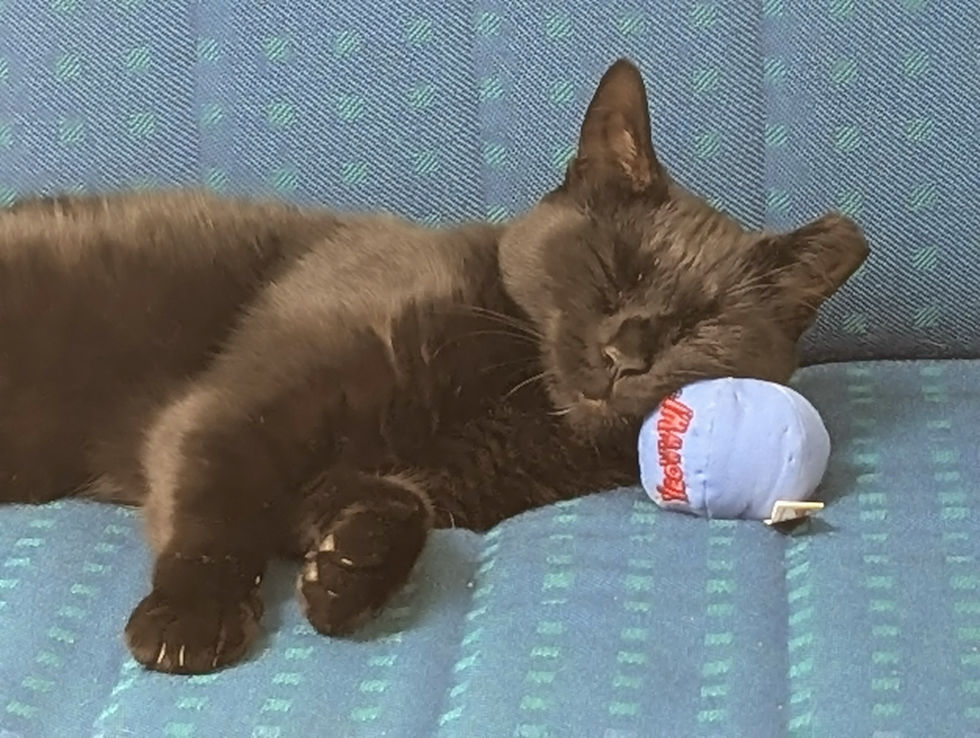
Our boat cat Luna joined us long before we moved aboard full time. She didn’t apply for the job, but she’s adapted beautifully to life on a sailboat.
If you’re still in the early stages of planning the move aboard, our beginner guide to living on a boat in the UK walks through what the transition actually looks like day to day.
1. Start Slowly
Moving onto a boat can be a big change for a cat. New smells, unfamiliar sounds, and the movement of the boat can all feel strange at first. A good approach is to let them explore the boat while it’s stationary before introducing sailing.
Some sailors even spend a few nights at the marina first so their cat can get used to the environment before the boat starts moving. Cats usually adapt surprisingly quickly once they realise the boat is their new territory.
2. Create Safe Places
Cats feel most comfortable when they have a few reliable hiding spots.
On a boat this might be:
a cosy corner of the saloon
a blanket in the quarter berth
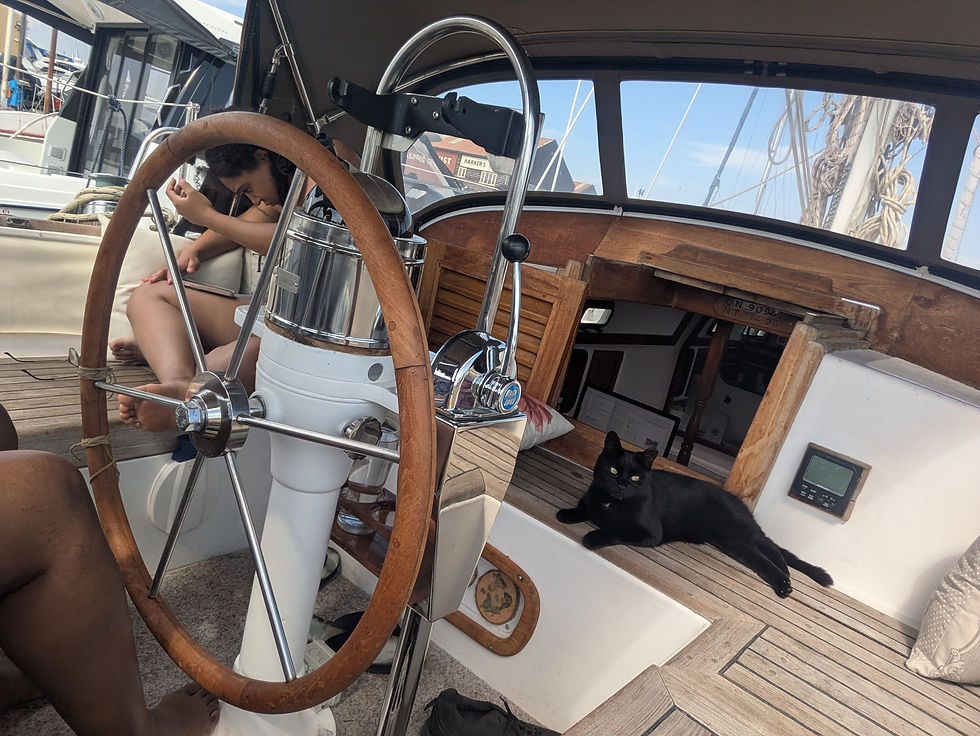
a favourite seat in the cockpit
Some liveaboard sailors even secure a cat bed so it doesn’t slide around in rough conditions. Luna has several favourite spots on the boat and rotates between them depending on the weather and her mood.

3. Think About Safety on Deck
The biggest worry most people have about boat cats is falling overboard.
Many liveaboard sailors train their cats to wear a harness so they can be clipped in while on deck.
Other common safety ideas include:
supervising cats while they’re outside
making sure there’s a ladder or easy way back onto the boat
keeping cats inside when sailing offshore
Cats can swim, but it’s best not to rely on that. Before we moved aboard, we also put together a simple checklist of safety essentials for boat life — it’s worth running through if you’re setting things up from scratch.
4. Secure Food and Water
On land a food bowl stays where you put it. On a boat… not so much.
Using non-slip mats or deeper bowls helps stop water and food from sliding across the cabin floor when the boat moves. Dry food also needs to be stored carefully so it doesn’t get damp in a marine environment.
5. Litter Boxes Need Thought
The litter tray needs a stable spot that won’t move when the boat heels.
Many liveaboards place it:
in the heads
near the companionway
in a dedicated corner of the cabin
Once cats get used to the boat, they normally keep using their litter tray just like they would in a house. Getting the setup right from the start makes a big difference — especially in a small space. We’ve shared the gear that’s worked best for us in our boat cat essentials guide.
6. Cats Often Love Boat Life
One thing that surprises people is how well cats adapt to living aboard.
Boats have lots of vertical space, windows to watch wildlife, and their humans are usually around much more often.
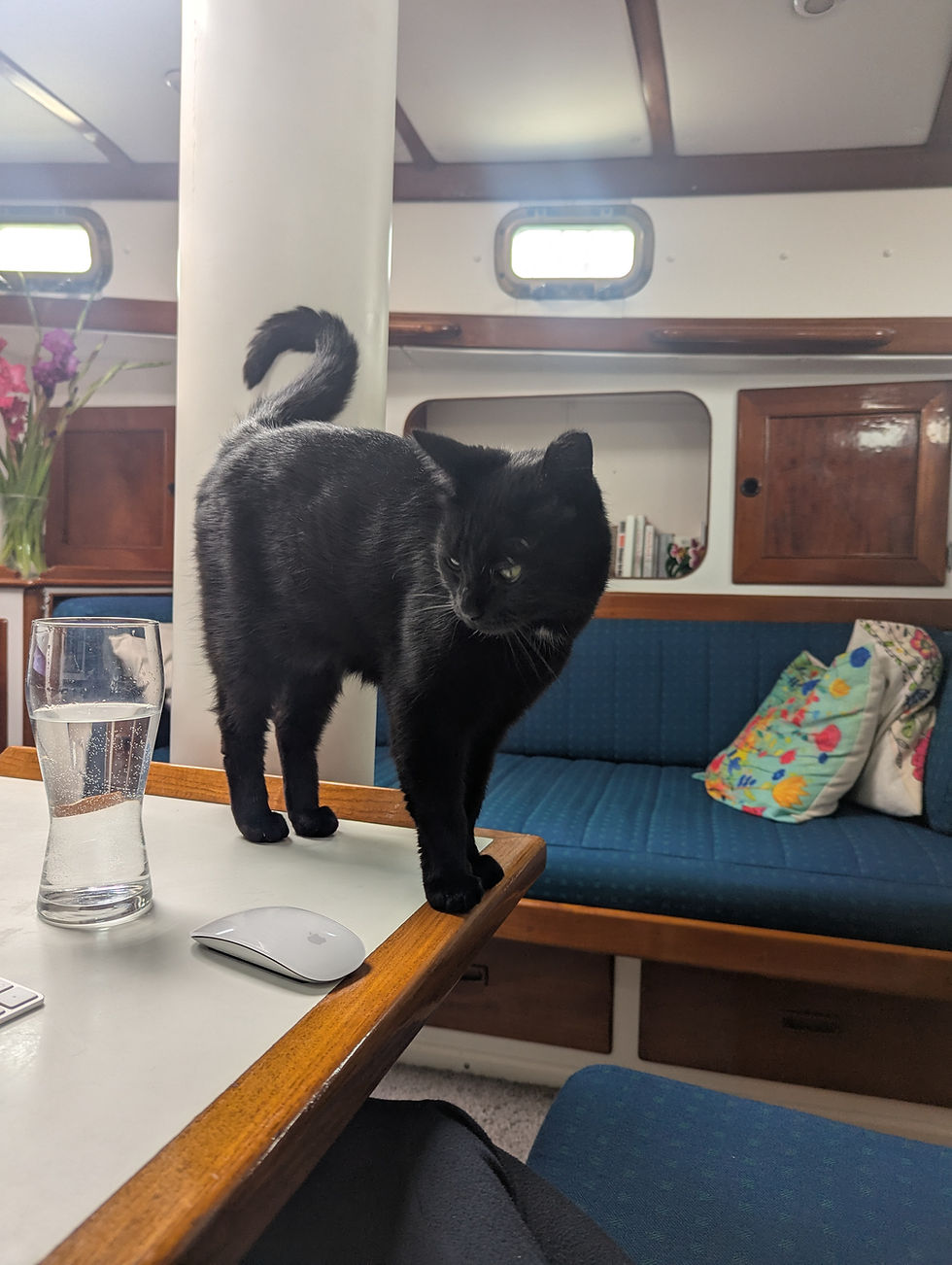
Many liveaboard sailors say their cats quickly claim the boat as their territory.
Luna certainly has.
Final Thoughts
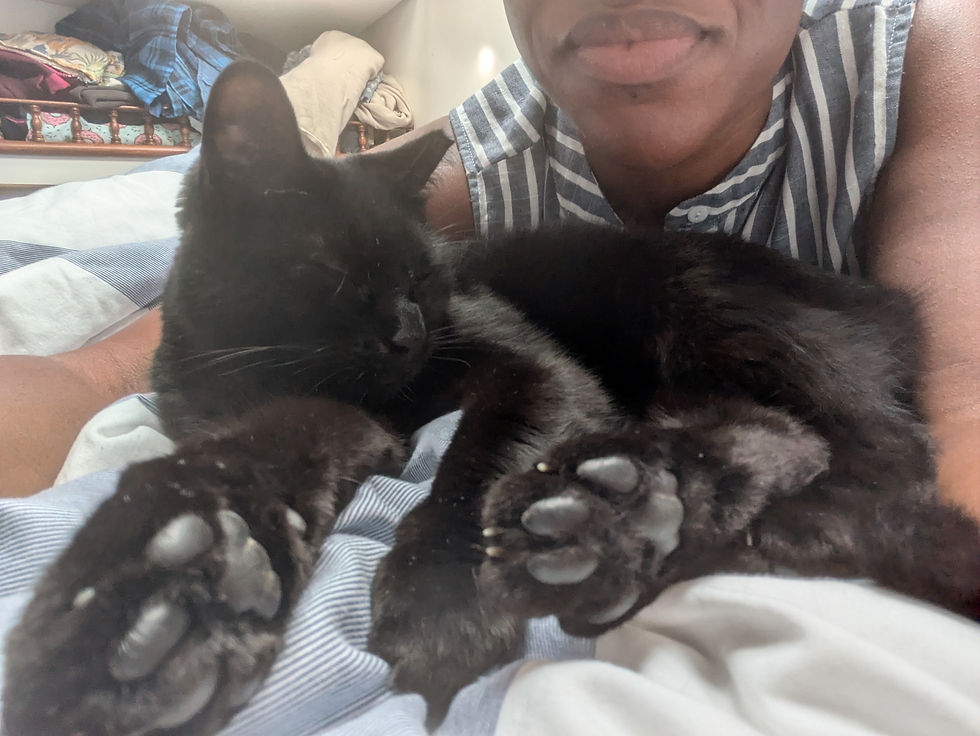
Living aboard with a cat isn’t just possible — it can be wonderful. Cats are independent, adaptable, and surprisingly good sailors. With a few safety precautions and a little patience, they can become the perfect boat companion.
If you’re curious what day-to-day life actually looks like, we shared what our first month living aboard was really like — including how Luna settled in.



Comments